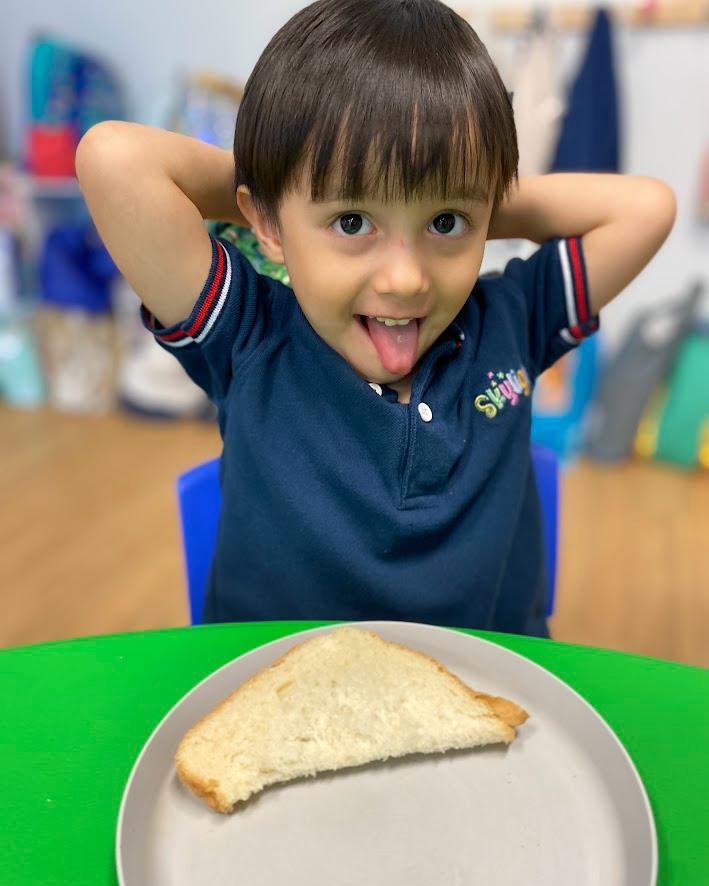
Giovanni was just two months shy of his third birthday when everything changed.
Looking back, there were small signs—the way he walked a little differently, slightly unsteady, a bit delayed compared to what we expected given how tall both of us are. But as parents, we didn’t think too much of it. He was our happy, playful boy, full of life, laughter, and personality.
One evening, while having dinner at the grandparents’ home, they noticed something we had grown used to.
“He’s limping,” they said.
We gently brushed it off. “No, that’s just how he walks—he’s always been like that.”
Still, something stirred in us. We took a video of him and sent it to a doctor friend. Within a short time, the reply came back—simple, but urgent:
“Please take him to see a pediatrician tomorrow.”
The next day, everything began to unravel.
The pediatrician examined Giovanni’s reflexes, and almost immediately, his expression changed. He told us we needed to transfer to another hospital right away. They were concerned it could be a stroke.
A stroke.
Our world began to collapse in that moment.
After three failed attempts to sedate Giovanni for imaging, he was finally put under general anesthesia for an MRI. We waited, suspended in fear and uncertainty. When he was brought out, we saw the neurosurgeon speaking quietly with us. In that instant, we knew.
It was a tumor. We just didn’t know how big. It was nearly 9 centimeters.
Those first days were a blur of grief. We cried for three days and three nights. We couldn’t eat. We couldn’t sleep. The shock was overwhelming—more than anything we had ever experienced. And yet, even in that exhaustion, we knew we had to act.
We went from hospital to hospital, searching for someone experienced in pediatric neurosurgery. Eventually, we were directed to University Malaya Medical Centre (UMMC) in Kuala Lumpur. The very next day, we packed up and drove down—beginning what would become nearly five months of living away from home.
The Fight Begins
Between early April and May, Giovanni underwent a whirlwind of medical interventions. He was formally diagnosed with ETMR (Embryonal Tumor with Multilayered Rosettes)—one of the fastest-growing and rarest brain tumors. He endured a first surgery that removed 70% of the tumor, followed by a second surgery resulting in gross total resection.
But the journey was far from over. By the end of May, Giovanni developed a cerebrospinal fluid (CSF) leak. This led to more procedures—resuturing, placement of a shunt, and insertion of a chemotherapy port. Before even starting chemotherapy, Giovanni had already undergone five surgeries.
He then began three cycles of intensive chemotherapy, each lasting three weeks. After the first cycle, there were early concerns about regrowth, but the tumor board advised continuing treatment.
“We hoped. We prayed. We pressed on.”
But by the end of July, our fears were confirmed—the tumor had returned. Another surgery followed.
A Season of Uncertainty
In August, Giovanni was scheduled for high-dose chemotherapy. But due to logistical challenges, we couldn’t secure a bed at UMMC. We explored alternatives, including private hospitals, but circumstances didn’t align. We found ourselves in a painful gap—fighting for treatment, yet unable to access it.
We urged the neurosurgeon to remove even the smallest regrowth—just 1–2 cm—because we knew how aggressive this disease was. From the end of July until November, Giovanni had no active treatment. In our hearts, we feared what that meant. ETMR is relentless. Still, we held on to hope—believing, praying, trusting.
Italy: A Final Hope
In October, we received an opportunity in Italy. Giovanni is half Italian, and this allowed us access to treatment there. We went.
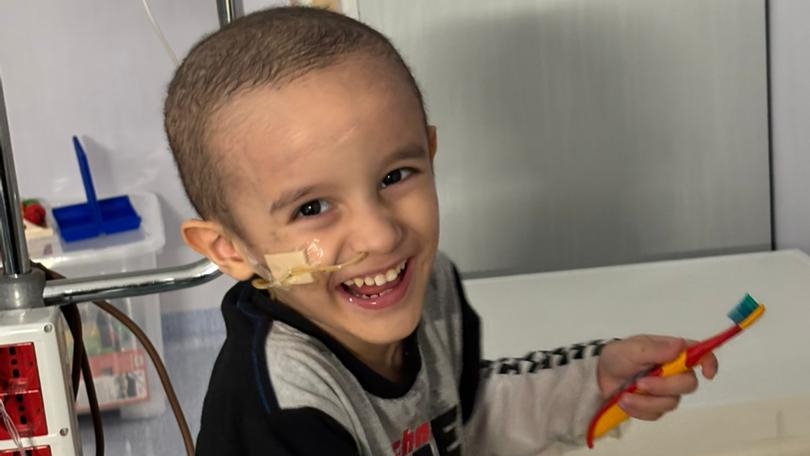
The hospital was highly specialized, with experience in pediatric oncology and additional treatment options beyond what we had locally. Giovanni underwent seven weeks of inpatient care, including high-dose chemotherapy and preparation for further treatment.
We held on to hope again. But this time, the answer came with finality.
The week before Christmas, the doctors told us there was nothing more they could do. We were asked to bring Giovanni home.
Coming Home & The Final Weeks
We flew back to Malaysia. It felt surreal to return to Penang after months away—especially knowing why we were back. Our two other children had been lovingly cared for by family, and we were finally reunited. Giovanni began having unexplained fevers—rising and falling without a clear source. Deep down, we knew our time with him was short.
So we chose to treasure every moment.
In mid-January, Giovanni suddenly declined neurologically. After starting steroids, he improved again, giving us a precious window of time. When the steroids were reduced, he declined once more, and an infection brought us back to UMMC. There, we spent five unexpectedly beautiful weeks.
Even as the tumor continued to grow—to the point where a new shunt was no longer possible—Giovanni was joyful. Truly joyful. Eventually, the palliative care team advised us to bring him home, with the external drain in place. We took an ambulance ride home.
That was his last Christmas. His last Chinese New Year.
A Joy That Cannot Be Explained
Back home, Giovanni gradually declined. He lost the ability to eat, but he could still swallow. He could still say a few words.
And somehow—he was still happy. Even at the very end.
During this time, we learned things we never imagined we would—how to administer subcutaneous medications, how morphine works, how to keep him comfortable. But more than that, we learned from Giovanni. He showed us what it means to live.
Even when confined to a hospital bed for weeks, he woke up each morning declaring that he had “joy in his heart.” He sang songs about being in the Lord’s army. He ate with enthusiasm. He embraced each day as a gift.
He lived fully—more fully than many of us ever do.
The Day He Went Home
On March 9, Giovanni became unresponsive. It looked like quiet, peaceful seizures. Less than 24 hours later, at 7 a.m., he went home to the Lord.
Although we had time to prepare, nothing can truly prepare parents for the loss of a child. The pain is deep, raw, and indescribable. And yet, in the midst of that pain, we hold on to hope. If it were not for Christ, we do not know how we would move forward. We grieve—but not without hope. We mourn—but we also rejoice.
Because Giovanni is no longer in a frail, broken body. He is whole. He can run. He can jump. He can sing, smile, and shine in ways he never could here.
What Giovanni Taught Us
In his short life of 3 years and 9 months, Giovanni taught us many things. But above all, he taught us this:
“My brethren, count it all joy when ye fall into divers temptations.”
— James 1:2
He showed us that joy is not dependent on circumstances. It is rooted in something far deeper. Our son was young. But he taught us how to truly live.
Until We Meet Again
Giovanni, we love you more than words can ever express.
Thank you for your joy. Thank you for your courage.
Thank you for letting us be your parents.
We will see you again.
❤️